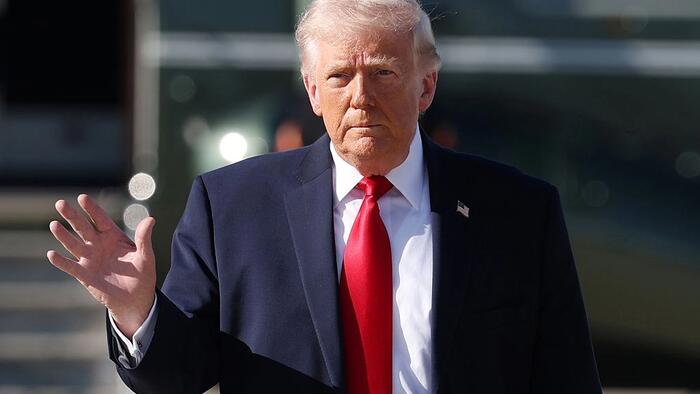
Authored by Aldgra Fredly via The Epoch Times,President Donald Trump on April 20 invoked the Defense Production Act to issue a series of memorandums focused on strengthening coal supply chains, natural gas transmission, and liquefied natural gas capacity.Trump also signed memos aimed at boosting domestic petroleum production, enhancing grid infrastructure, and expanding the deployment of “large-scale energy” and related infrastructure.In a post on X, White House spokeswoman Taylor Rogers said the memos would allow the Energy Department to use funding from the One Big Beautiful Bill Act to strengthen the country’s “grid infrastructure and unleash reliable, affordable, secure energy.”The Defense Production Act is a cold war-era legislation that grants the president authority to expand and expedite the supply of materials from the domestic industrial base for national security purposes.In the memos, Trump cited his Jan. 20, 2025, executive order declaring a national energy emergency, noting that insufficient energy supply could expose the country to “hostile foreign actors” and risk national security.“Consistent with that declaration, I find that ensuring the domestic capability for development, manufacturing, and deployment of large-scale energy and energy-related infrastructure is essential to United States national defense, yet due to financing risks, regulatory delays, and market barriers, these cannot be met in full under existing market conditions,” the president stated in one of his memos.The memos direct the Energy Department to make “necessary purchases, commitments, and financial instruments” to support projects expanding oil production, coal supply chains, natural gas transmission, liquefied natural gas capacity, grid infrastructure, and other energy-related infrastructure.The move came as the Trump administration worked to curb surging commodity prices fueled by the conflict with Iran, which has driven up oil and fertilizer costs.Iran last week said it would open the Strait of Hormuz to all commercial vessels during a 10-day ceasefire between Israel and Lebanon, but started charging tolls and later reinstated “strict military oversight” over the strait due to the resulting U.S. naval blockade of Iranian ports. The United States then imposed a blockade against vessels visiting Iranian ports on April 13 after the United States said that Iran was not allowing free passage through the strait, which was a condition for the ceasefire.The situation heightened market uncertainty and pushed oil prices higher on April 20, with crude trading at about $94.75 on April 20.To ease pressure on oil markets and ensure adequate supply, the Trump administration on April 17 renewed a sanctions waiver that allows nations to buy Russian oil stranded at sea, extending it through May 16 after the previous license expired on April 11.In February, the Treasury Department issued a general license authorizing the exploration, development, and production of oil and gas in Venezuela as part of an effort to boost oil supply chains.
Source link