Earlier this week, President Donald Trump said that oil and gas companies have made “too much money” from rising crude oil prices during the Iran war.
“Chevron, too much money. Exxon Mobil, too much money,” he said. “They’re going to give some of that back to the public and they better cut the retail price, the consumer price.”
It wasn’t clear whether Trump’s remarks were a promise, a threat or simply an off-the-cuff demand. The White House announced no plan to compel oil companies to lower prices or return money to consumers, and Trump did not elaborate.
But the idea fit a pattern of his second term. Since returning to office, Trump has repeatedly held out the prospect of direct financial benefits for different groups of Americans — farmers, people trying to start families, taxpayers and consumers.
The pitch has been consistent: money in your pocket, courtesy of the president. The outcomes have been far less consistent. Some benefits arrived later or in more limited form than Trump’s rhetoric suggested. Others never materialized at all.

In December, Trump and Agriculture Secretary Brooke Rollins announced $12 billion in Farmer Bridge Assistance payments, framed as relief for growers battered by trade disruption, from global tariffs Trump himself levied, and elevated input costs. Of that, $11 billion consists of one-time bridge payments meant to tide farmers over until higher reference prices and other benefits from the One Big Beautiful Bill Act take effect later this year.
The Department of Agriculture said qualifying farmers could expect the money in their bank accounts by February. The per-acre rates, released on New Year’s Eve, were relatively modest for many crops: $44.36 an acre for corn, $20.51 for barley and $8.05 for flax. But the assistance came only after farmers had absorbed months of losses from lower commodity prices, trade disruptions and higher costs.
Other promises of direct financial relief have produced an even wider gap between Trump’s initial pitch and the eventual result.
During the 2024 campaign, Trump promised that Americans trying to start a family could get free in vitro fertilization, or IVF. “Your government will pay for — or your insurance company will be mandated to pay for — all costs associated with IVF treatment,” he said.
Neither happened. A February 2025 executive order funded no IVF treatment and instead directed federal agencies to make recommendations. The plan announced in October offered discounts on certain fertility drugs through a deal with drugmaker EMD Serono, along with guidance allowing employers to voluntarily offer fertility benefits as a supplement to their health plans. The White House neither required employers to participate nor subsidized those that did, and a typical IVF cycle still costs thousands of dollars.
Trump said the government could send checks directly to Americans.
Two other proposals were even more straightforward: Trump said the government could send checks directly to Americans. So far, neither has.
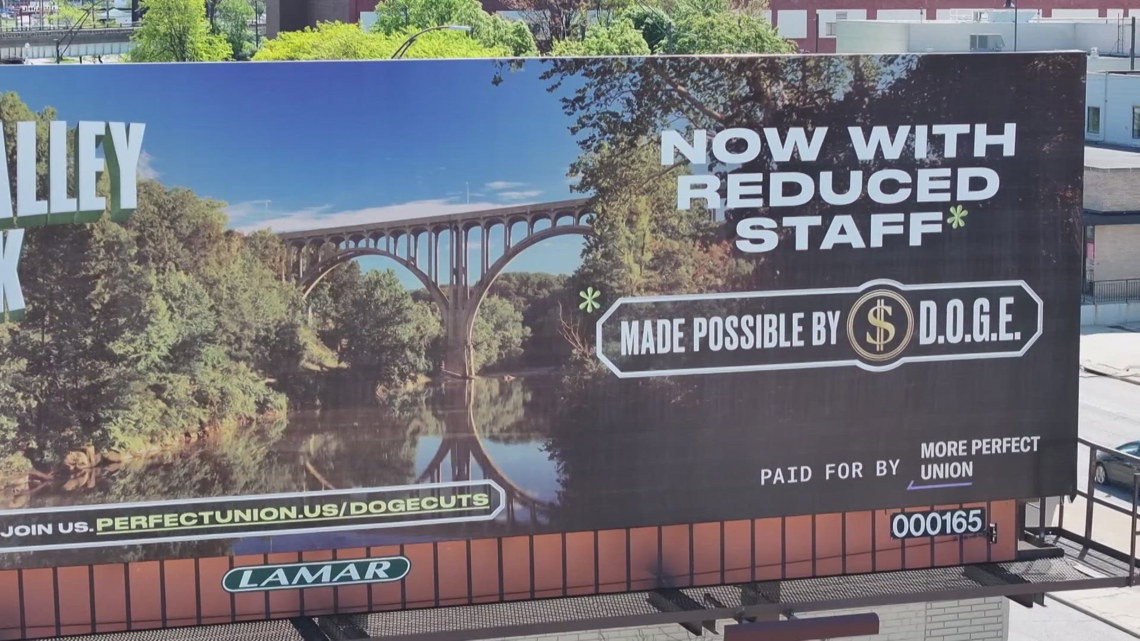
In early 2025, Trump endorsed a plan floated by Azoria CEO James Fishback and backed by Elon Musk to return 20% of the Department of Government Efficiency’s savings to taxpayers, potentially producing checks of up to $5,000. But that figure depended on DOGE cutting more than $2 trillion in federal spending. Its own website ultimately reported savings of about a tenth of that amount.
Even those claimed savings are disputed. The Government Accountability Office found that, as of July 7, DOGE’s “Wall of Receipts” documented only $110 billion in savings, rather than the $215 billion it claimed, and that some estimates were incorrect or unsupported.
DOGE officially shut down on July 4, and no legislation authorizing the dividends ever passed. No checks were sent.
Recommended
Trump’s proposed “tariff rebate” also has yet to produce a check. The president repeatedly floated $2,000 payments funded by tariff revenue. But the proposal currently lacks two things it would need: sufficient revenue and congressional approval.
The revenue side took a major hit on Feb. 20, when the Supreme Court struck down the administration’s use of the International Emergency Economic Powers Act to impose tariffs on almost every country in the world. Trump has since turned to other legal authorities, but a federal judge ordered the invalidated tariffs refunded. In an August court filing, the administration said it had already returned about $100 billion of the roughly $166 billion collected under IEEPA.

Congressional approval presents another obstacle. Several Republican senators have publicly rejected the rebate proposal, with many conservatives arguing that tariff revenue should instead go toward reducing the national debt.
Meanwhile, the checks face a wall inside Trump’s own party: Several Republican senators shot down the plan publicly, calling it everything from “a bad idea” to “insane,” with most conservatives preferring to put tariff revenue toward the national debt. One analysis estimated that a broadly distributed $2,000 payment could cost roughly $600 billion, compared with annual tariff revenue of roughly $200 billion to $300 billion.
Even Treasury Secretary Scott Bessent has emphasized that the payments would require legislation, offering no commitment beyond “we will see.”
Taken together, the promises stand out for how tangible they sounded: not a vague promise that life would be better, but a specific financial benefit voters could imagine.
The results have been considerably less tangible. Farmer assistance arrived after a long wait and amounted to relatively modest per-acre payments for many crops. Trump’s promise of free IVF became discounted fertility drugs and optional employer benefits, not universal coverage. The proposed DOGE dividend never materialized, and the tariff rebate remains stalled by legal, fiscal and political obstacles.
Now Trump is suggesting that oil companies should “give some of that back to the public.” So far, however, the White House has offered no mechanism for making that happen. For Americans hearing yet another promise of money coming their way, Trump’s second-term record offers reason to wonder if the check will ever be in the mail.
This is a preview of MS NOW’s Project 47 Newsletter. As President Trump continues implementing his ambitious agenda, get expert analysis on the administration’s latest actions and how others are pushing back sent straight to your inbox every Tuesday. Sign up now.

Lily Becker
Lily Becker is a producer on “State of Play” for MS NOW.