President Donald Trump is opening the door to a major move that could have consequences long after he leaves office. His latest comments suggest he is weighing how to protect people close to him from another prolonged political battle.
The president made clear that his own experience has shaped how he views the risks facing those around him. And he pointed to his predecessor while discussing an authority that could become central to his eventual decision.
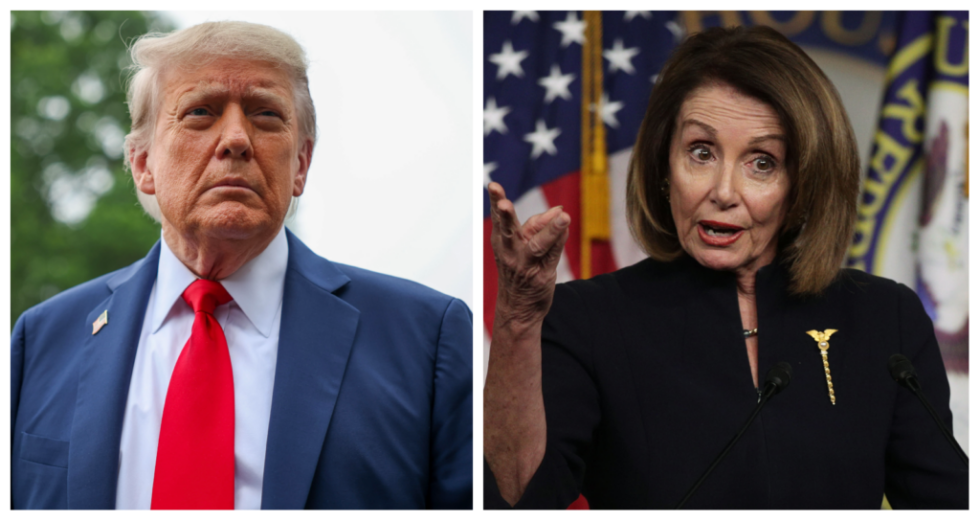
During Thursday’s Newsmax “Finnerty” interview, Trump asserted he could pardon himself and signaled openness to protecting aides through pardons.
The October 15 exchange raised the possibility of broader protections before his presidency ends, without establishing a final decision.
Trump maintained that he had done nothing wrong while discussing whether he might exercise that authority.
“I’m allowed to do a pardon, a self-pardon,” Trump told host Rob Finnerty.
Advertisement
He then emphasized that he did not want people working for him subjected to years of costly legal battles.
“I don’t want my people to go through,” Trump said later in the exchange.
Finnerty also brought up Trump’s family during the discussion, although Trump did not announce pardons for specific relatives.
Advertisement
The president’s response focused on his own experience and his desire to spare others a similar ordeal.
Newsmax’s account described Trump as potentially using pardons to protect aides against prosecutions he would consider politically motivated.
That framing reflects the president’s longstanding contention that political opponents have used the legal system against him.
His comments presented potential clemency as a protective measure for those serving alongside him.
Trump also invoked former President Joe Biden, arguing that his predecessor demonstrated the extraordinary reach of presidential pardon authority.
The discussion therefore connected two issues: Trump’s asserted personal authority and his concerns about what could happen to his team.
Neither amounts to an announcement that particular documents have been prepared or that any specific recipient has been selected.
Advertisement
Biden’s own clemency decisions provide an important backdrop to the exchange.
Before leaving office, Biden pardoned family members and issued protections covering several prominent figures who had attracted Trump’s criticism.
Those recipients included Anthony Fauci, retired Gen. Mark Milley and members of the House committee investigating January 6.
Biden also pardoned his son Hunter following federal gun and tax cases.
Advertisement
People reported that White House officials offered no additional explanation of Trump’s latest comments beyond the interview itself.
The possibility of pardoning aides and relatives involves a different constitutional question from a president attempting to pardon himself.
Presidents possess broad authority to grant clemency for federal offenses, including pardons issued before a conviction.
That authority does not extend to state crimes or eliminate civil liability.
It also cannot pardon offenses that have not yet occurred, meaning clemency cannot authorize future criminal conduct.
Whether a president can successfully pardon himself remains an unresolved legal question, despite Trump’s confident assertion.
Congress’s Constitution Annotated describes competing interpretations rather than an established judicial answer.
Advertisement
Its discussion explains that supporters emphasize the Constitution’s broad language and absence of an express prohibition on presidential self-pardons.
Opponents raise the principle that a person should not act as the judge of his own case.
A presidential attempt could therefore produce a constitutional fight separate from the political controversy surrounding the decision.
For Trump, Thursday’s message centered on preventing people around him from enduring the legal struggles he described.
He left open a potentially consequential course of action while stopping short of announcing that he would take it.
🚨 JUST IN: President Trump hints at PARDONS for his allies, and even potentially HIMSELF “I can tell you this: I don’t want to see my people go through years of nonsense.” “I did nothing wrong…I’m allowed to do a self-pardon.” I SAY, PARDON AWAY! 🔥 DEMOCRATS wrote this playbook. On his way out the door, Biden handed preemptive pardons to Fauci, Milley, the entire J6 committee, and members of his own family! None of them had been charged with anything.
— Eric Daugherty (@EricLDaugh) October 16, 2026
Any eventual decision would depend on whom he sought to protect, what conduct was covered and the documents actually issued.
This article may contain commentary which reflects the author’s opinion.