An election lawsuit has been thrown out after a Wisconsin judge found the challengers had not established a concrete injury.
Advertisement
The decision ends the case at the standing stage, rejecting the plaintiffs’ claimed basis for bringing their allegations to court.
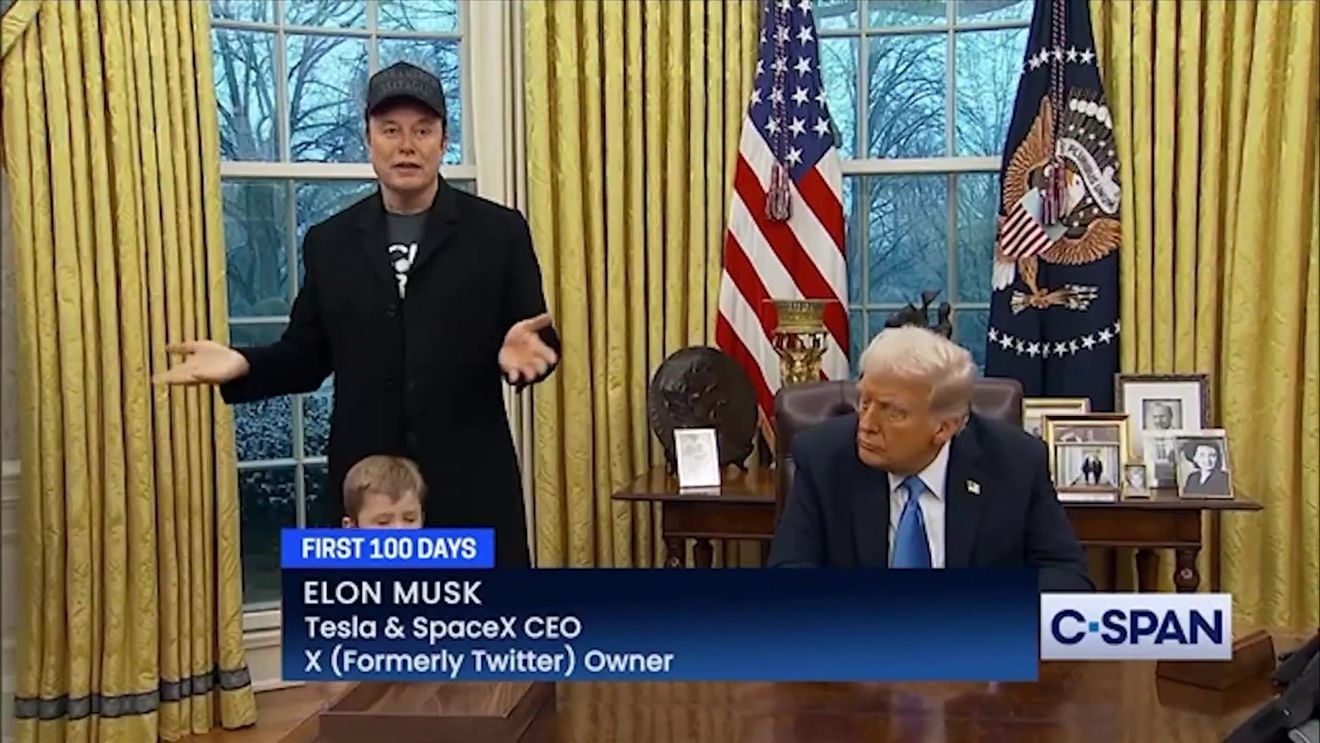
Brown County Circuit Judge Marc Hammer dismissed the lawsuit against Elon Musk, America PAC and United States of America Inc.
The case concerned activities connected to Wisconsin’s 2025 Supreme Court election, including petition payments and two million-dollar checks.
Hammer signed the decision November 18, and it was filed November 19.
Advertisement
Defense attorneys filed notice of entry of the final order that same day.
The plaintiffs were the Wisconsin Democracy Campaign, Paul Gagliardi and Deborah Patel.
They sought declarations involving two election bribery counts and one unlawful lottery count, along with additional remedies.
Their lawsuit also pursued civil conspiracy and public nuisance claims in the name of Wisconsin.
They requested damages and an order preventing defendants from engaging in similar conduct in future elections.
The defendants advanced five grounds for dismissal, but Hammer’s analysis focused on whether the plaintiffs had standing.
His ruling found their allegations did not establish the kind of injury necessary to maintain the case.
The plaintiffs had not alleged that defendants prevented them from voting or burdened their ability to cast ballots.
Nor had they alleged that their own voting was otherwise affected, Hammer wrote.
The broader allegation that defendants undermined Wisconsin’s democracy did not satisfy the requirement for a concrete injury.
That distinction proved decisive: objections to political conduct were insufficient without an adequately alleged injury to these plaintiffs.
Hammer also rejected arguments based on additional time and resources spent opposing the defendants’ actions.
He explained that voluntary political advocacy and campaign contributions do not become imposed losses simply because opponents provoke a response.
The Wisconsin Democracy Campaign likewise had not alleged that it was prevented from carrying out its organizational mission.
Advertisement
Instead, its claim concerned the greater effort and resources required to continue that work.
“Mere disagreement or frustration with Defendants’ conduct is insufficient to confer standing,” Hammer wrote.
The ruling therefore addressed who could bring this lawsuit, without deciding whether the disputed payments were lawful.
The complaint’s allegations centered partly on America PAC’s petition opposing activist judges.
Advertisement
According to the decision, the PAC posted the petition March 20, 2025, offering registered Wisconsin voters payments for participation.
The alleged offer included $100 for signing and another $100 for each successful referral.
It expired at the end of Election Day, April 1, 2025.
The decision also described a March 27 announcement from Musk about an upcoming Wisconsin appearance.
According to that account, his initial post referred to two million-dollar checks offered in appreciation for taking time to vote.
Musk deleted that announcement and posted another limiting admission to people who had signed the petition, the decision states.
America PAC and Musk held the event in Green Bay on March 30.
There, Musk brought two attendees onto the stage and gave each a $1 million check.
Advertisement
The plaintiffs characterized the arrangement as an effort to exchange money for participation in a civic duty and constitutional right.
Those allegations formed the substance of their complaint, but they did not overcome the court’s standing analysis.
The civil dismissal follows a separate decision earlier this year not to pursue criminal charges.
The Wisconsin Elections Commission voted 5-1 to refer possible bribery violations to the Brown County district attorney.
That office subsequently sought a special prosecutor to consider the matter.
In August, La Crosse County District Attorney Tim Gruenke announced that he would not bring criminal charges against Musk.
Gruenke said he did not believe he could obtain a conviction.
“Nobody was paid anything of value for voting or promising to vote,” Gruenke wrote in his decision, WBAY reported.
The criminal charging decision and Hammer’s civil ruling reached different procedural questions, though both ended without penalties against Musk.
This article may contain commentary which reflects the author’s opinion.