Erika Kirk is speaking out after a Utah judge delivered a major ruling in the murder case involving her late husband, conservative activist Charlie Kirk.
The decision means the man accused of killing Kirk will now stand trial on an aggravated murder charge that could carry the death penalty.
Advertisement
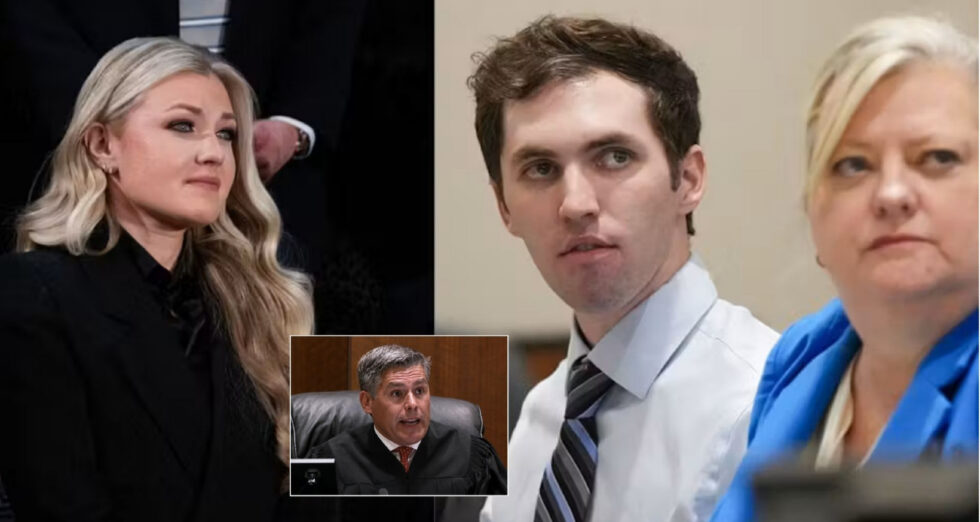
Erika Kirk called the ruling “an important step” in her family’s pursuit of justice nearly one year after her husband was killed. She was inside the Provo courtroom alongside Kirk’s parents as Judge Tony Graf announced his decision.
The judge ruled Tuesday that 23-year-old Tyler Robinson will stand trial for aggravated murder in connection with Kirk’s September 10, 2025, killing at Utah Valley University in Orem.
Advertisement
Robinson has pleaded not guilty, and prosecutors will be required to prove the allegations against him at trial.
“Today’s decision, which comes nearly a year since Charlie was taken from us, marks an important step in our family’s pursuit of justice for him,” Erika Kirk said in a statement.
Advertisement
“Every step in this process carries the weight of all that Charlie’s murder has taken from his family, especially his children who will grow up without their father,” she continued.
“We are grateful to all who have continued to pray for us, support us, and stand with us through a year of unimaginable grief.”
Kirk said her family remains united as the criminal proceedings enter their next phase.
“As the next phase of the judicial process begins, our family remains united in our love for Charlie, our commitment to the pursuit of justice, and our prayer for a transparent and timely process,” she said.
Kirk was reportedly accompanied in court by her in-laws, Robert and Kathryn Kirk, as Graf explained his ruling.
She was reportedly seen briefly burying her face in her hands as the judge discussed the potential use of still images showing the moment her husband was struck in the neck.
Prosecutors allege Robinson deliberately shot Kirk with a high-powered rifle as the 31-year-old Turning Point USA co-founder addressed thousands of people at an outdoor event.
“Tyler James Robinson shot and killed Charlie Kirk because he disagreed with him, and he did it by firing a high-powered rifle into a crowd of over 3,000 people, which created a great risk of death that anyone would know about,” prosecutor Ryan McBride told the court.
Advertisement
Prosecutors presented evidence over five days in July as they sought to convince the court there was sufficient evidence for the aggravated murder case to proceed.
Among the evidence cited by prosecutors was DNA they say connects Robinson to the bolt-action rifle allegedly used in the shooting.
STATEMENT ON BEHALF OF THE KIRK FAMILY:
Today’s decision, which comes nearly a year since Charlie was taken from us, marks an important step in our family’s pursuit of justice for him.
Every step in this process carries the weight of all that Charlie’s murder has taken from his…
— Erika Kirk (@MrsErikaKirk) September 2, 2026
Authorities also allege Robinson left a handwritten note for his romantic partner stating, “I had the opportunity to take out Charlie Kirk, and I took it.”
Advertisement
Graf could have allowed the prosecution to proceed on the lesser charge of murder rather than aggravated murder.
Instead, the judge determined the aggravated murder charge could move forward, citing, among other factors, the proximity of other people to Kirk when the fatal shot was fired.
The aggravated charge is particularly significant because Robinson could face the death penalty if prosecutors obtain a conviction and ultimately prevail in seeking that punishment.
Advertisement
Kirk was one of the country’s most prominent young conservative activists and a major supporter of President Donald Trump and the MAGA movement.
Through Turning Point USA, Kirk became particularly influential among younger conservatives and played a prominent role in efforts to mobilize young voters ahead of the 2024 presidential election.
Robinson remains presumed innocent unless and until he is proven guilty beyond a reasonable doubt.
This article may contain commentary which reflects the author’s opinion.