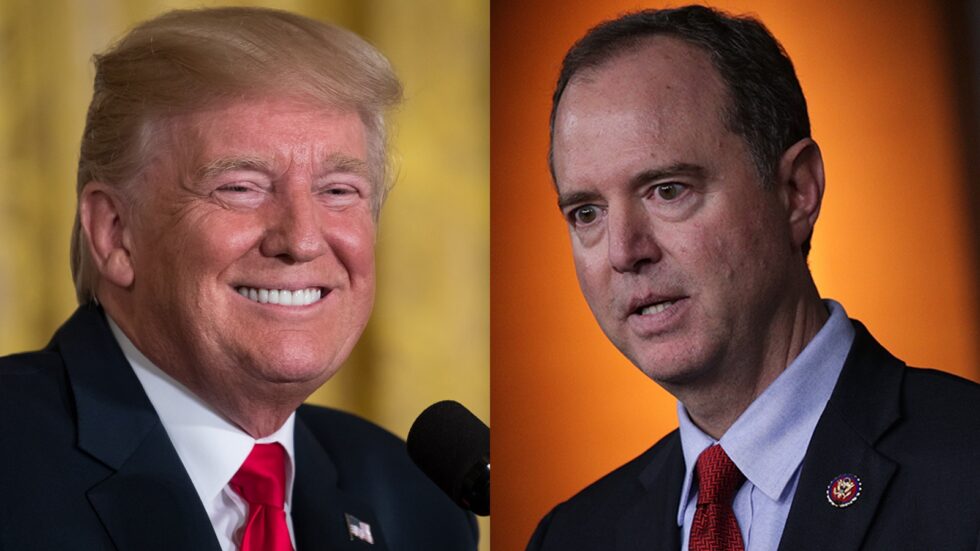
Sen. Adam Schiff accused companies Monday of pocketing tariff refunds while leaving shoppers who paid higher prices without reimbursement.
Advertisement
His criticism followed reporting that several businesses used some of the money for bonuses, including payments to executives and employees.
“Companies got tariff refunds, consumers got screwed,” the California Democrat wrote on X.
Schiff argued that businesses passed tariff costs to customers through higher prices and should return money after receiving government refunds.
Advertisement
“Instead of reimbursing Americans who paid the higher prices, corporate executives decided to line their own pockets,” he added.
His remarks drew on a ProPublica investigation examining what companies did with refunds following the reversal of Trump’s IEEPA tariffs.
The report identified at least nine companies that used portions of their refunds for bonuses rather than reimbursing consumers.
Those companies included Stanley Black & Decker, TJX Companies and Acushnet Holdings, according to the investigation described in the reporting.
Stanley Black & Decker received at least $298 million in tariff refunds, while retailer TJX received $331 million.
Together, those two companies received at least $629 million, although the reporting identified only portions as going toward bonuses.
The investigation said consumers largely lacked a direct way to recover additional costs they absorbed through higher prices.
Studies cited in the reporting estimated that consumers bore between 26% and 43% of tariff expenses.
That estimate concerns the portion of tariff costs borne by consumers and helps explain Schiff’s demand that companies reimburse shoppers.
It does not establish how much any individual customer paid or what refund that shopper might receive from a company.
Schiff used the findings to criticize business leaders and argue that the handling of refunds undermined public confidence.
“No wonder people feel the system is corrupt, and corporate greed is out of control,” Schiff wrote.
The reported bonus payments included employees as well as executives, giving workers a share of some companies’ refunds.
Advertisement
U.S. Trade Representative Jamieson Greer had urged businesses to share the refund money with workers, according to the reporting.
That appeal encouraged companies to direct part of the money toward their workforce after receiving refunds from the government.
Some companies used the funds for employee bonuses and retirement benefits as refunds reached businesses across the country.
Advertisement
The broader refunds totaled more than $100 billion after the Supreme Court struck down tariffs imposed under IEEPA.
The corporate decisions examined by ProPublica included uses that affected executive compensation, employee pay and prices charged to customers.
Burlington Stores was identified as an exception because it planned to direct its refund toward lower prices for shoppers.
The retailer received $55 million and planned to use that money for pricing rather than to boost earnings.
That approach would make the benefit available through shopping prices, according to the company’s plan described in the report.
Tesla offered another account of how it used the money, saying refunds helped fund expansion of American manufacturing capacity.
Chief Financial Officer Vaibhav Taneja said last month that Tesla reinvested its tariff refunds in its U.S. factories.
Advertisement
Taneja also attributed improved third-quarter energy gross margins to the refunds and adjustments in warranty costs.
His comments connected the refunds to both Tesla’s reported quarterly performance and its plans for future domestic investment.
Taneja said future capital spending would support Robotaxi expansion, Optimus production, solar manufacturing and artificial intelligence computing infrastructure.
He also identified a semiconductor fabrication facility among the areas that future capital spending would support.
Elon Musk said Tesla targeted production of 5 million vehicles by around 2030 and was preparing additional manufacturing capacity.
The plans describe where Tesla intends to invest, while Taneja’s remarks identified tariff refunds as one source supporting factory expansion.
Stanley Black & Decker, TJX, Acushnet and Burlington did not immediately respond to Benzinga’s requests for comment, Benzinga reported.
Schiff’s demand focuses on compensation for consumers who paid higher prices, while Greer’s appeal emphasized sharing the refunds with workers.
This article may contain commentary which reflects the author’s opinion.