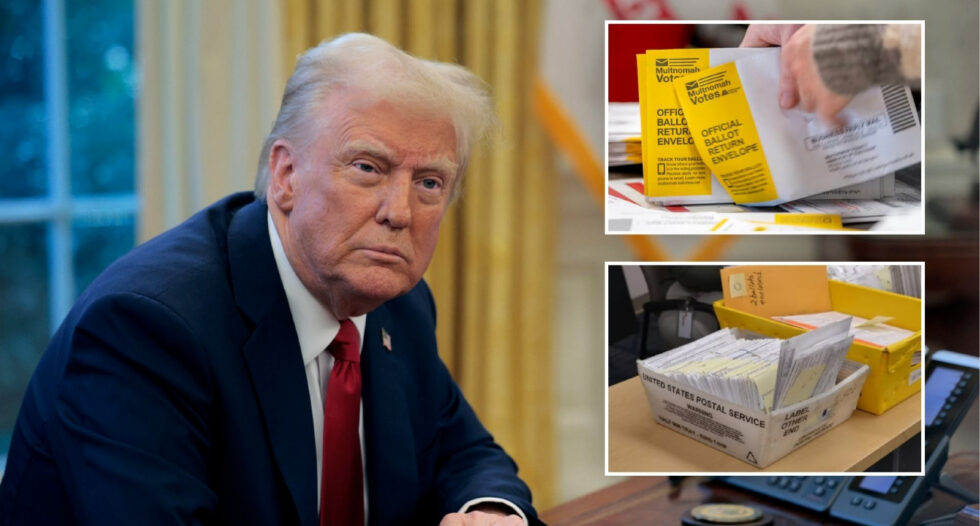
A federal judge in California has ordered the Trump administration to temporarily halt investigations into suspected noncitizen voter registration across nine states, delivering a setback to one of the administration’s major election-integrity initiatives less than two weeks before the November 3 midterms.
Advertisement
U.S. District Judge Araceli Martinez-Olguin, a Biden appointee, ruled in Oakland on Wednesday that federal investigators must suspend portions of the effort until polls close on Election Day, concluding that the government was relying on potentially unreliable information that could result in eligible U.S. citizens being wrongly targeted.
The order covers California, Connecticut, Georgia, Missouri, Nevada, New York, Pennsylvania, Washington and Wisconsin, although Martinez-Olguin delayed its effect until Friday evening to give the Trump administration an opportunity to appeal.
Advertisement
The case centers on a federal investigation known as the “Unlawful Voter Initiative,” which seeks to identify noncitizens who may have registered or voted illegally in federal elections.
Federal law prohibits noncitizens from voting in federal elections, and the Trump administration argues that aggressively identifying potentially unlawful registrations is necessary to protect eligible voters and confidence in election results.
Martinez-Olguin, however, found significant problems with the information being used to generate investigative leads, describing some of the voter lists as “voluminous and unreliable.”
According to court filings, investigators obtained information from state and local governments, publicly available records and commercial databases while attempting to determine whether people appearing on voter rolls were actually U.S. citizens.
The judge said there is no comprehensive federal database containing the citizenship status of every U.S. resident, creating what she described as a significant possibility of errors when investigators attempt to match voter records against immigration information.
Those concerns intensified during a federal “surge” that began in late August, when investigators were reportedly instructed to complete reviews of flagged individuals in no more than 12 minutes per person.
The investigation also examined naturalized Americans to determine whether any had registered or voted before obtaining U.S. citizenship, according to legal filings cited by the Associated Press.
Advertisement
The lawsuit challenging the operation was brought by the California Nurses Association, National Nurses United, the Voto Latino Foundation, San Francisco and Santa Clara County.
The plaintiffs argued that aggressive federal investigations were intimidating eligible citizens and interfering with voter-assistance, mobilization and election-monitoring activities shortly before Election Day.
Advertisement
Martinez-Olguin did not find that union members themselves were being prevented from voting, but concluded that the plaintiffs had demonstrated sufficient harm to their voter-assistance activities to justify temporary restrictions on the federal operation.
The Department of Homeland Security defended the investigation Thursday, saying its focus remains on identifying noncitizens who illegally vote rather than investigating people it believes are American citizens.
The ruling comes amid a much broader confrontation between the Trump administration and states over voter-roll information, with the Justice Department demanding detailed records as part of its effort to identify potentially ineligible registrations.
The administration has separately sued California after federal investigators identified more than 20,000 people they believe are likely noncitizens who were registered to vote or received ballots, allegations California officials have contested.
Advertisement
DHS said that preliminary analysis compared publicly available California voter-registration information with federal immigration records and produced a list of people investigators considered likely noncitizens, while stressing that its review remains ongoing.
The Justice Department has asked California to review those names and sought to prevent ballots associated with people on the federal list from being counted until their citizenship could be verified.
California’s dispute with the administration illustrates the central disagreement in the broader controversy, with federal officials arguing that even isolated illegal votes can dilute lawful ballots while critics warn that inaccurate citizenship matching can ensnare eligible naturalized Americans.
The nine-state injunction does not establish that federal authorities are prohibited from investigating illegal voting generally, but it restricts the challenged investigative practices during the crucial final days before the midterms.
This article may contain commentary which reflects the author’s opinion.