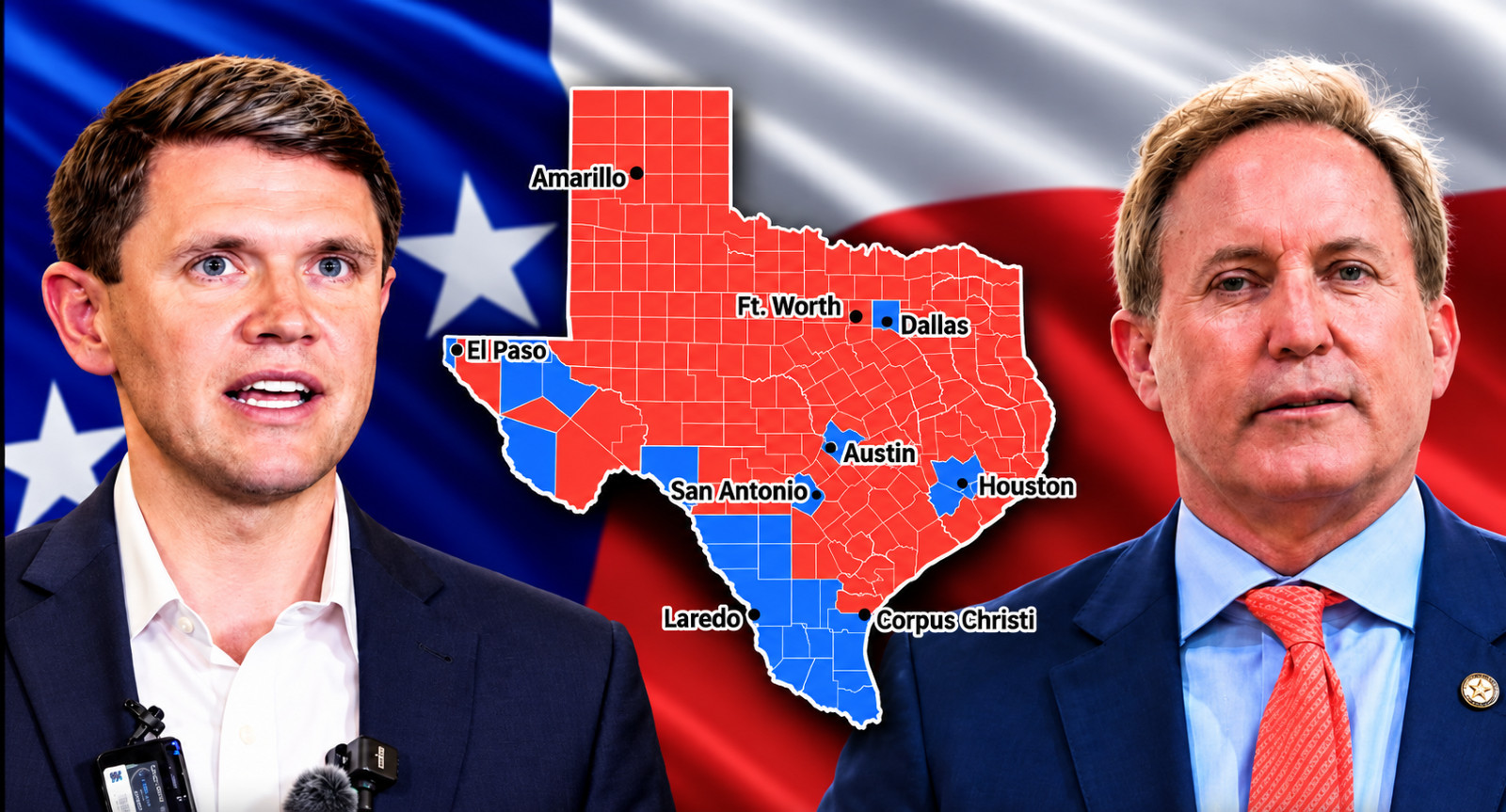
Republicans have lost the governor’s office in their largest stronghold, ending an era shaping Texas for more than three decades.
Advertisement
The defeat denies a veteran another term and opens a confrontation over education policy, household costs, and the state’s direction.
Democrat Gina Hinojosa defeated Republican Greg Abbott, the Associated Press reported, breaking her party’s long exclusion from Texas’s top office.
Hinojosa, 52, will become the first Latina to serve as Texas governor when she takes office in January 2027.
Advertisement
She will also become the first Democratic governor since Ann Richards, who left office in 1995, ending the GOP’s hold.
Abbott, 68, had sought a fourth term after campaigning on property-tax reductions and his record on safety and border security.
His defeat delivers a setback to Republicans in a state long central to conservative policy, fundraising, and electoral strategy.
Hinojosa, an Austin state representative and former board president, built her campaign around public education and the cost of living.
A central dividing line was Abbott’s private-school voucher program, which began in 2026 with $1 billion in taxpayer funding.
🚨 BREAKING: Gina Hinojosa (D) ELECTED GOVERNOR OF TEXAS, unseating Greg Abbott (R) in a historic flip
Texas just cooked itself.
They are about to find out what it means to be ruled by a Democrat https://t.co/27PlD3Jjwk
— Eric Daugherty (@EricLDaugh) November 4, 2026
The program provides support for students attending private schools, while Hinojosa campaigned against it and emphasized neighborhood public schools.
Her victory gives opponents of Abbott’s education agenda control of the governor’s office, although legislative approval remains critical.
Hinojosa also pledged to replace Texas Education Commissioner Mike Morath, a software developer and investor, with an educator.
That promise linked her criticism of Republican leadership to her background in local schools and the Texas Legislature.
The transition could produce divided government because Hinojosa will likely face a Republican-controlled Legislature, according to the supplied report.
Trinity University political scientist David Crockett warned before the election that such a result would require finding areas of agreement.
Advertisement
He argued that advancing meaningful legislation would be difficult, highlighting the difference between winning office and controlling the legislative agenda.
For Republicans, retaining legislative power would provide a check on a governor elected to challenge several of their priorities.
For Hinojosa, the task will be turning campaign promises into action while negotiating with lawmakers whose policy commitments differ sharply.
Crockett said before voting that a Democratic victory would be viewed as an earthquake after decades of Republican statewide success.
Advertisement
University of Houston lecturer Nancy Sims offered a national explanation, arguing that a breakthrough would reflect frustration with Washington.
She said before voting that a Democratic win would come from anger at the federal government and President Donald Trump.
Those assessments place the Texas result within a broader argument about national politics, even as schools dominated Hinojosa’s campaign.
Her background provides a connection to that issue: she entered public service through the Austin Independent School District board.
According to her official legislative biography, she ran after proposed school closures threatened her son’s campus and other neighborhood schools.
She won election to the board in November 2012 and became its president through a vote of fellow trustees.
Austin ISD records show she stepped down as board president in December 2015 after filing for the Texas House.
Advertisement
She remained a trustee at that time, explaining her decision was appropriate even though resignation was not legally required.
Hinojosa ran for the Legislature in 2016 and represents District 49, encompassing central Austin and the University of Texas area.
Raised in the Rio Grande Valley, she attended the University of Texas before earning a law degree at George Washington.
Her legal career included civil rights and labor work representing union members, according to her official Texas House biography.
That combination of school-board service, legal advocacy, and legislative experience became the foundation for her challenge to a Republican governor.
The gubernatorial result follows another Democratic breakthrough in earlier reporting: James Talarico’s Senate victory over Republican Attorney General Ken Paxton, NPR reported.
Together, those outcomes represent losses for Republicans in two statewide contests and challenge assumptions about Texas as dependable GOP territory.
This article may contain commentary which reflects the author’s opinion.