A massive wave of tariff refunds is flowing from Washington to some of America’s biggest corporations after the Supreme Court struck down President Donald Trump’s sweeping emergency tariffs.
The ruling raised a politically explosive question over whether businesses that passed higher costs along to consumers will now return any of that money to the Americans who ultimately paid the price.
Advertisement
The federal government refunded an eye-popping $49.2 billion in tariff payments during June alone, according to Treasury Department figures, more than twice the $23.6 billion Washington collected in customs duties during the same month and creating a net customs outflow of roughly $25.6 billion.
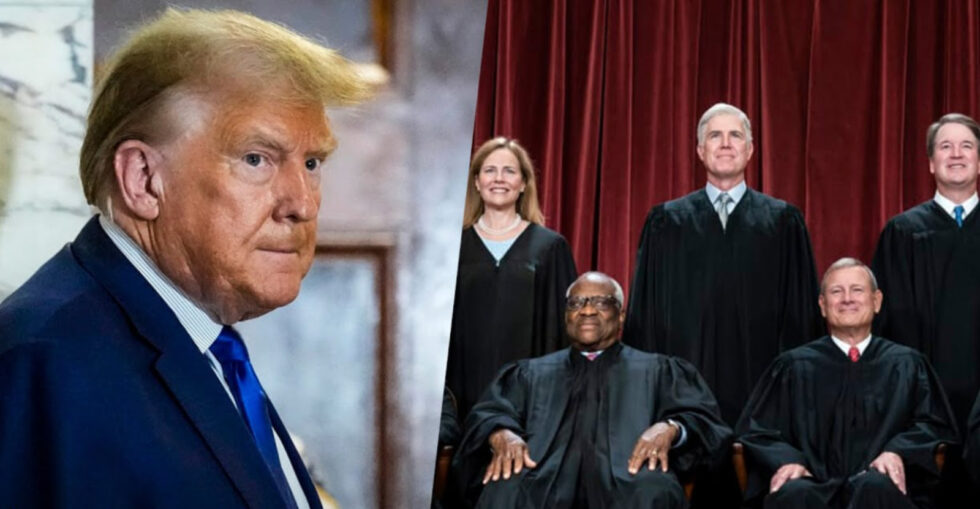
The enormous payout stems from the Supreme Court’s February 20 ruling in Trump v. V.O.S. Selections, where the justices ruled 6-3 that the International Emergency Economic Powers Act, commonly known as IEEPA, did not authorize the president to impose the sweeping tariffs at issue.
Advertisement
The high court itself did not establish the precise refund mechanism, but subsequent litigation in the U.S. Court of International Trade resulted in Judge Richard Eaton concluding that importers who paid the invalidated tariffs were entitled to receive their money back.
Advertisement
The Bureau of Economic Analysis estimates approximately $166 billion could ultimately be returned to affected U.S. businesses and importers, excluding interest, making the fallout from the ruling a potentially enormous hit to federal finances.
The Treasury’s June numbers demonstrate just how quickly that process accelerated, as refunds surged to $49.2 billion after approximately $22 billion had reportedly been returned during May.
By July, U.S. Customs and Border Protection had reportedly returned approximately $70 billion of the $166 billion in IEEPA tariffs potentially owed to businesses, with some of corporate America’s biggest names lining up to recover their payments.
Amazon has received approximately $600 million, while companies including Walmart, Home Depot, Target, Nike, General Motors, FedEx, and Costco have pursued tariff refunds, according to reports.
That is where the situation gets particularly uncomfortable for American consumers, because businesses frequently warned that tariffs would force them to raise prices, yet shoppers generally have no automatic legal mechanism guaranteeing that money recovered by importers will be returned to customers who may have absorbed higher prices.
Amazon is one of the major corporations that has publicly committed to returning at least some tariff-related money directly to qualifying customers, although the company says the circumstances where it can identify those customers are limited.
Advertisement
“We’ve identified a limited set of circumstances where we can trace that we’ve passed specific import charges onto customers, and when we receive those refunds, we will proactively contact affected customers and automatically issue refunds to them,” Amazon Chief Financial Officer Brian Olsavsky said.
“Otherwise, like other large retailers, we’ll utilize refunds to continue to invest in low prices for customers,” Olsavsky added.
Amazon has not publicly detailed exactly how many customers will qualify, which products are involved or precisely when those payments will arrive, leaving most shoppers unlikely to receive a direct check simply because the company recovered tariff money.
Advertisement
Other retailers are taking a different approach by using their tariff windfalls to cut prices or absorb other expenses, with companies including Walmart, Tractor Supply, SharkNinja and e.l.f. Beauty using refunds to support discounts or prevent additional price increases as consumers remain squeezed by inflation.
Walmart reportedly used its roughly $2.9 billion refund to help finance price rollbacks across approximately 11,000 products, while e.l.f. Beauty used about $50 million in returned tariff money to lower prices on key products and eventually made reductions permanent on roughly 10% of its lineup.
Advertisement
The controversy nevertheless illustrates one of the biggest problems with the refund system: Washington is repaying the companies that legally imported the goods and paid Customs, not necessarily the individual Americans who may have indirectly shouldered those costs at the checkout counter.
Even Justice Brett Kavanaugh highlighted that complication while dissenting from the Supreme Court’s tariff decision, noting that the government “may be required to refund billions of dollars to importers who paid the IEEPA tariffs, even though some importers may have already passed on costs to consumers or others.”
This article may contain commentary which reflects the author’s opinion.