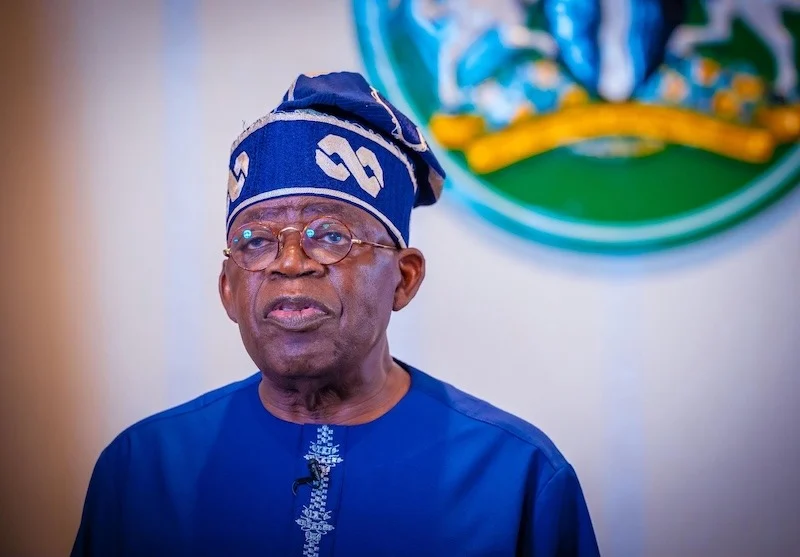
PRESIDENT Bola Tinubu’s directive for a comprehensive forensic audit of government systems and payrolls was apparently overdue. The ICPC’s discovery of two more purportedly fake government agencies, the National Brands Development and Made-in-Nigeria Special Project Office and the National Council for Skills Acquisition, after the so-called Presidential Foreign Intervention Promotion Council, has exposed a disturbing weakness central to Nigeria’s public administration.
The scandal is not simply about the arrest of alleged promoters or the suspension of permanent secretaries as investigations continue.
More importantly, the episode raises a far more fundamental question: how can entities that apparently had no legitimate government mandate operate with the appearance of official authority, access government premises, and interact with senior public officials without being detected?
The National Brands Development and Made-in-Nigeria Special Project Office is particularly revealing.
It reportedly organised public events, interacted with governors, government officials and diplomats, appointed coordinators across states and claimed international presence, including in the United States and China.
It presented itself as operating under the Office of the Secretary to the Government of the Federation. An OSGF memo in April 2025 reportedly proposed granting it formal “Special Project” status. An appointment letter subsequently placed its national coordinator within the OSGF and allocated temporary office accommodation to the project. This is farcical.
The PFIPC penetrated the OSGF, got official office space, waivers to recruit 300 staff, opened a CBN account and even got budgetary allocation of about N1.3 billion!
These are not shadowy organisations operating from an obscure backstreet. They apparently looked enough like government to gain access to government space, officials and institutions.
That is why reducing the affair to the alleged misconduct of individuals would miss the larger issue.
A government system that cannot readily authenticate its own agencies, officials and mandates is vulnerable to far more than fraud.
Such weaknesses can facilitate impersonation of government authority, illicit access to information, fraudulent transactions, unauthorised solicitation of funds and the creation of fictitious channels of influence.
That makes this a governance and national-security issue.
It is also a credibility problem. Foreign governments, diplomats, investors and international organisations dealing with Nigeria must be able to establish whether an institution presenting itself as a government agency actually exists and who has authority over it. Every such scandal adds another layer of suspicion to dealings with legitimate Nigerian institutions.
The President’s forensic audit must therefore go far beyond finding fake agencies. It should establish how fictitious or unauthorised entities and individuals were able to penetrate government structures, obtain office space, issue official-looking documents or gain recognition from public officials.
It should examine the integrity of systems including IPPIS, GIFMIS, the Treasury Single Account and other government databases and control mechanisms.
However, Nigerians have seen too many audits, committees and reform reports end in flowery recommendations and little action.
This scandal should instead force a reckoning with the larger problem. Nigeria has built a government that is too large, fragmented and unwieldy to manage efficiently.
The more ministries, departments, agencies, commissions, councils and special-purpose offices government creates, the greater the administrative complexity, and the more opportunities for duplication, patronage, waste and corruption.
The Steven Oronsaye Report, submitted in 2012, identified 541 federal parastatals, commissions and agencies. It recommended reducing 263 statutory agencies to 161, including abolishing 38, merging 52 and reverting 14 to ministerial departments. It also proposed management audits and other measures to eliminate duplication and reduce government expenditure.
More than a decade later, much of that reform agenda remains unimplemented. This is exactly why this scandal has exploded in the face of the Presidency.
The consequences are becoming increasingly difficult to ignore. World Bank figures show Federal Government personnel costs rising from about N4.18 trillion in 2023 to N5.66 trillion in 2024 and an estimated N7.57 trillion in 2025.
Beyond personnel costs, office accommodation, vehicles, utilities, procurement, travel, allowances and administrative overheads impose additional burdens on the treasury.
Yet the sheer size of government has not produced any government of comparable quality.
Nigerians still struggle with insecurity, unemployment, poor electricity, inadequate healthcare, failing infrastructure and declining purchasing power. Millions can barely survive while a relatively small political and bureaucratic class consumes a disproportionate share of public resources.
This is the fundamental contradiction Nigeria must confront.
Government exists to serve citizens, not to continually expand the number of positions, offices and bureaucratic empires available to those inside it.
The international direction is also clear. The OECD’s 2026 survey found that 77 per cent of surveyed member countries were pursuing savings in government operations, including organisational restructuring, digitalisation, shared services and the streamlining or merging of agencies and ministries to make government simpler, more responsive and more efficient.
In June, Ecuador slashed the number of ministries from 14 to 10. In 2024, Vietnam trimmed government ministries from 30 to 21 in a fiscal optimisation drive, while Pakistan merged some ministries and eliminated six to cut excess staff and operational overhead.
The United States famously cut 10 per cent of federal jobs last year in a sweeping drive to eliminate waste under Donald Trump’s now-rested Department of Government Efficiency led by Elon Musk.
Under Tinubu, Nigeria moved in the opposite direction, adding six more core ministries and introducing bills for about 50 completely new statutory agencies to the National Assembly.
Worse, the lackey parliament approves these agencies without thoroughness.
Without doubt, this is the time to implement the Oronsaye Report. The forensic audit should produce a definitive national inventory of every federal MDA, including its enabling law, mandate, staffing, payroll, budget, assets, revenue and measurable outputs. Every institution should be required to justify its existence.
Where mandates overlap, institutions should be merged. Where agencies have outlived their usefulness, they should go. Where functions can be performed more efficiently by existing ministries or departments, duplication should end.
The fake-agency scandal is a symptom of institutional decay. It has exposed a government architecture so sprawling that the state itself appears to have lost track and become vulnerable to being impersonated from within.
Nigeria needs a smaller, cleaner and more accountable government with stronger institutions, tighter controls and fewer bureaucratic empires.
The Tinubu administration now has an opportunity to turn this embarrassing scandal into a defining reform.
Apart from finding the fake agencies, the forensic audit should expose and dismantle the bloated architecture that made it possible for them to flourish.