The U.S. Supreme Court delivered a landmark decision on Thursday that will have big implications on Americans’ Second Amendment rights.
In a 6-3 decision, the nation’s highest court reaffirmed the fundamental right of law-abiding Americans to defend themselves.
The Supreme Court struck down Hawaii’s restrictive law that effectively turned private businesses open to the public into gun-free zones by default.
Advertisement
The ruling in Wolford v. Lopez (24-1046) marks another triumph for constitutional originalism and delivers a sharp rebuke to liberal states attempting to erode the Second Amendment through creative regulatory schemes.
Writing for the 6-3 majority, Justice Samuel Alito declared Hawaii’s Act 52 unconstitutional under the Second and Fourteenth Amendments.
The law criminalized licensed concealed-carry permit holders from bringing handguns onto private property open to the public — such as stores, restaurants, gas stations, and shops — unless the owner provided “express authorization.”
Advertisement
This flipped the longstanding common-law default, under which the public could enter unless explicitly barred.
“The regime hobbles what the Second Amendment protects: the right of Americans to carry arms for self-defense as they go about their daily lives,” Alito wrote.
Advertisement
He emphasized that the law imposed “severe restrictions on the daily activities of residents who have satisfied the State’s rigorous requirements for the issuance of a carry permit.”
Permit holders faced a maze of potential barriers, forcing them to seek permission before entering routine establishments or risk criminal penalties.
The decision reverses the Ninth Circuit and aligns with the Court’s post-Bruen framework from New York State Rifle & Pistol Association v. Bruen (2022).
Alito meticulously applied the history-and-tradition test, finding Hawaii’s law presumptively unconstitutional because it burdens conduct protected by the plain text of the Second Amendment — carrying arms for self-defense.
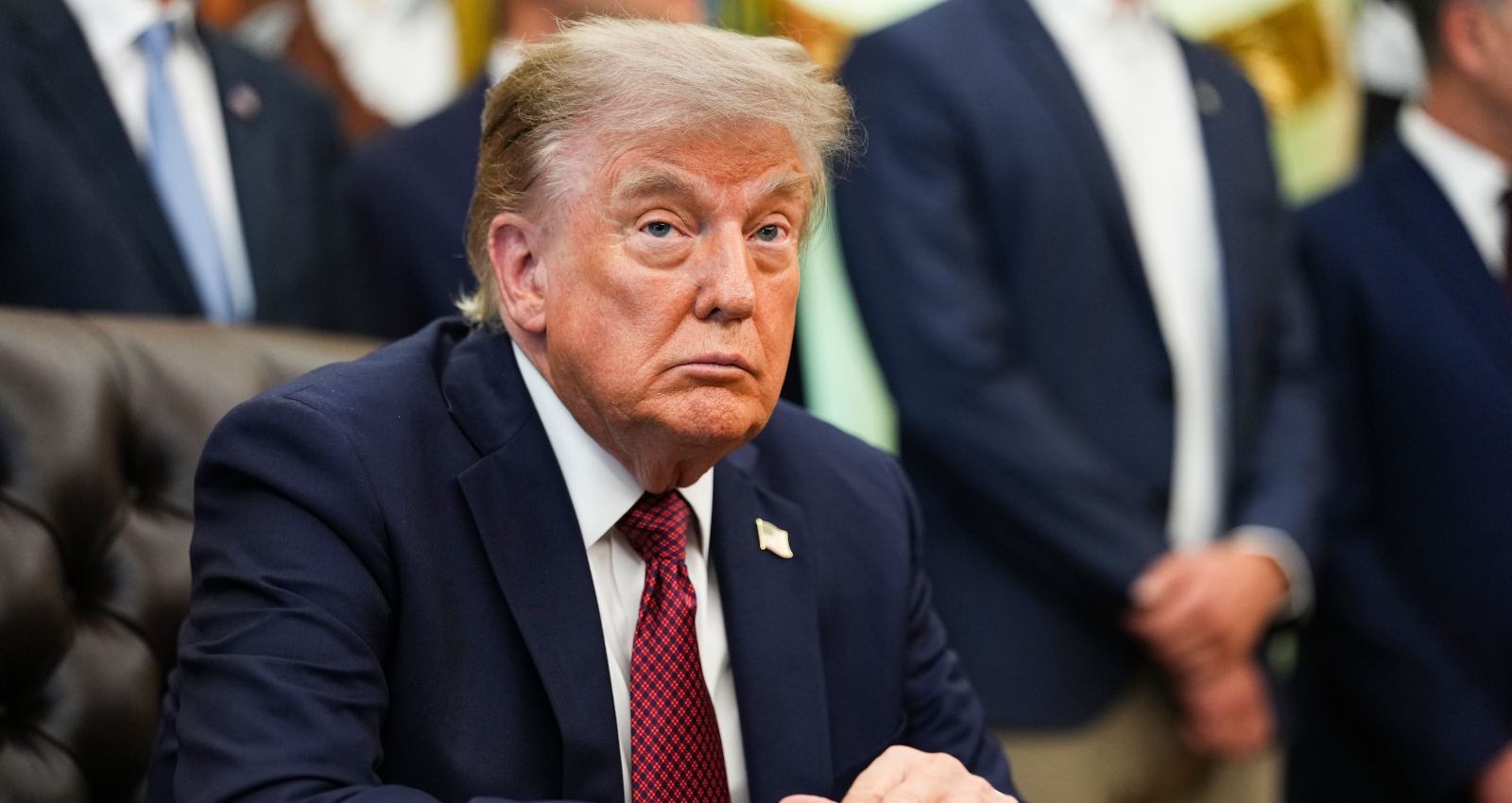
The Trump administration played a key role in bolstering the challengers.
The Solicitor General filed an amicus brief and participated in oral arguments, urging the Court to protect Second Amendment rights against state overreach.
The administration’s involvement underscored President Trump’s commitment to defending lawful gun owners from Biden-era style restrictions that lingered in blue states.
Officials argued the Hawaii law deprived individuals of their constitutional right to bear arms in public spaces, effectively nullifying Bruen’s protections through property-rule gimmicks.
This aligns with the Trump DOJ’s broader objectives: enforcing a national, uniform understanding of the Bill of Rights that does not bend to local “spirits” like Hawaii’s “spirit of Aloha.”
The administration sought to prevent states from using default rules to achieve what outright bans could not after Bruen.
Justice Alito dismantled Hawaii’s historical analogues as inadequate. He noted the law’s departure from common law: “Under that rule, everyone, including those lawfully carrying firearms, may enter unless expressly prohibited.”
Alito argued that Hawaii’s new default “imposes a new and significant burden.”
“The Second Amendment cannot give way to ‘the spirit of Aloha’ in Hawaii… any more than it can yield to the spirit of the Big Apple… Merely local attitudes can neither shrink nor inflate the meaning of fundamental Bill of Rights guarantees,” Alito wrote.
Alito rejected colonial-era hunting laws as analogous: They “targeted unauthorized hunting and applied to land where game could be found, not retail establishments… Their obvious aim was to prevent the distinctive harms and risks associated with unauthorized hunting. The gap… is too wide.”
Alito eviscerated reliance on an 1865 Louisiana Black Code law, writing, “This tainted artifact from Louisiana’s Black Code… cannot be taken seriously.”
Citing McDonald, Alito highlighted how such laws disarmed vulnerable Black citizens post-Civil War, contrary to the Fourteenth Amendment’s purpose.
Justice Amy Coney Barrett concurred, joined in part by Justices Clarence Thomas and Neil Gorsuch, reinforcing the majority’s textual and historical approach.
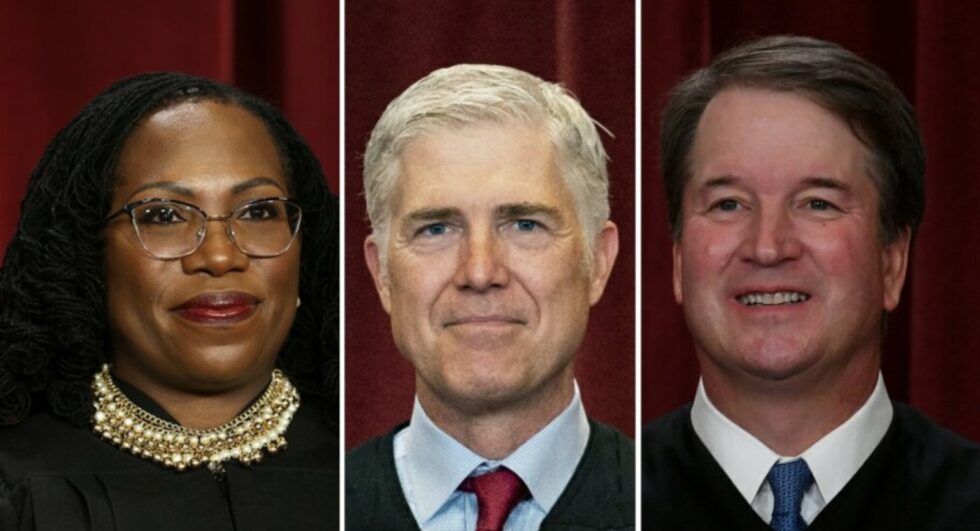
In dissent, Justice Elena Kagan argued for upholding the law based on property rights traditions.
Justice Ketanji Brown Jackson, joined by Justice Sonia Sotomayor, contended the statute merely protected property owners’ right to exclude without burdening the Second Amendment.
Their dissents highlighted the liberal justices’ preference for balancing tests over original meaning.
Chief Justice John Roberts and Justices Thomas, Gorsuch, Kavanaugh, and Barrett joined Alito’s opinion.
This ruling prevents liberal states from circumventing Bruen by redefining property defaults to disarm law-abiding citizens in everyday public accommodations.
The decision strengthens Second Amendment protections against judicial activism and regulatory evasion. It affirms that the right to bear arms is not a “second-class right” but a uniform national guarantee.
This article may contain commentary which reflects the author’s opinion.