President Donald Trump just ousted another Republican whom he argued wasn’t being loyal enough.
Two years from now, his revenge list could be even longer.
Advertisement
The president has already slammed two House Republicans for what he sees as slights, and over the past year, the White House has been circulating a longer list of possible targets.
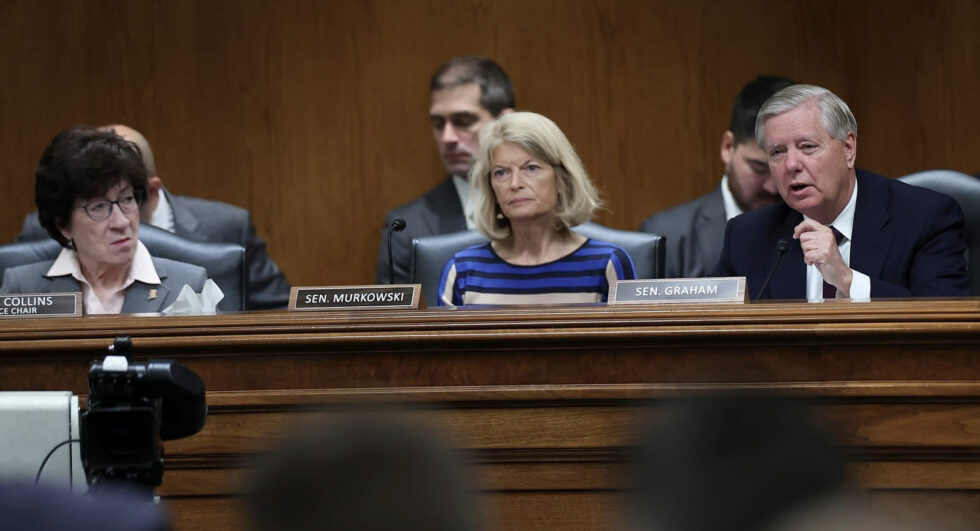
Trump could also go after several GOP senators running for re-election in 2028, such as Lisa Murkowski of Alaska, Rand Paul of Kentucky, and Todd Young of Indiana.
He wants to make a significant impact on the Republican Party as he nears the end of his presidency.
Trump’s late move to back someone running against Texas Sen. John Cornyn, who lost his bid to be re-elected Tuesday night to Texas Attorney General Ken Paxton, made it more likely that his much-talked-about “revenge tour” could continue into the next election cycle.
Cornyn backed Trump in January 2024 and did everything he could to win Trump’s support once Trump won the Republican nod for president in 2024, even though he wasn’t sure about Trump’s comeback bid at first.
Advertisement
But Trump chose to seek revenge anyway, which some people think might make other GOP lawmakers think twice about running for another term instead of putting in a hard and possibly pointless effort to get re-elected.
“Look at all of them that are up in 2028 … do they think about retiring?” asked one Republican senator who was granted anonymity to speak candidly about colleagues who have previously broken with the president.
Alaska Gov. Mike Dunleavy is preparing to announce a 2028 run for the U.S. Senate against Sen. Lisa Murkowski, according to several sources close to the governor teased this week.
The move would place him against Murkowski, who has repeatedly clashed with President Trump and is often viewed as one of the most moderate Republicans in Congress.
Dunleavy, by contrast, has been a strong Trump ally since 2016.
Dunleavy has earned a reputation for avoiding Washington’s spotlight but producing results in Alaska. “He’s not about an ego and pushing himself in front of the cameras.
He gets stuff done,” the source said. “He doesn’t like the cocktail parties and photo ops.”
Even so, those close to him say he understands that “being in Washington is the only way to get things done.”
While he has joked that he prefers Alaska’s Arctic landscapes to “all this concrete” in Washington, he recognizes the need to represent the state at the national level.
Dunleavy was the second governor to endorse Trump in 2016 and has been one of the most frequent governors to visit the White House despite the 3,500-mile distance.
“Trump has talked to him before about running and wants him to run,” the source said.
“A lot of people have mentioned this (race) to him and … I think it is a very viable option for him,” another source told Fox News Digital.
“Obviously there are a lot of frustrations with Sen. Murkowski,” the source added, noting her tense relationship with Trump. “Gov. Dunleavy has been not only a successful governor, but a strong ally for him. So it’s only natural that he’d be hearing that from Alaskans — but also from folks in the broader MAGA movement.”
Dunleavy, like Murkowski, has succeeded under Alaska’s ranked-choice voting system, which critics say has benefited Democrats. But unlike her past challengers, sources say he has broad support outside conservative circles.
He is also respected among Native communities across the North Slope and rural Alaska, where he has focused on energy development, infrastructure, and rural education. Those ties could prove critical in a statewide race where the Native vote has often played a decisive role.
“Murkowski has never faced a challenger like him,” another source said. “He’s built support that goes beyond just conservatives.”
The 2028 matchup would pit two of Alaska’s most prominent figures against each other: Murkowski, the entrenched moderate with a family legacy in Alaska politics, and Dunleavy, the Trump-aligned governor who has drawn support across communities.
This article may contain commentary which reflects the author’s opinion.