President Donald Trump provided another big update on the progress of the White House ballroom, which has been made ‘controversial’ by left-wing media and Democrats who have opposed it every step of the way.
In addition, Trump shredded legal action taken against him and the administration over the ballroom’s construction, insinuating opponents were judge-shopping and claiming they had no real legal standing to sue.
Advertisement
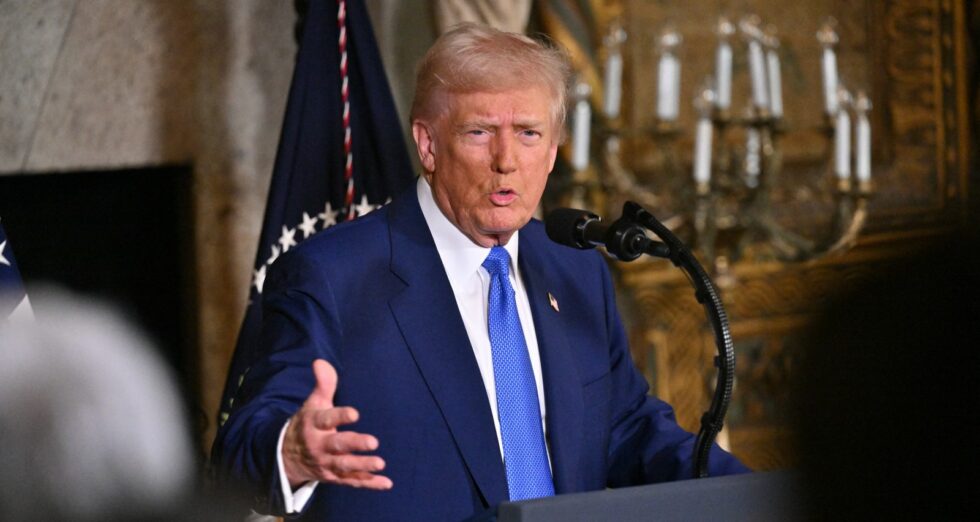
“The Ballroom is coming along fantastically well. It’s on time, and under budget (Unlike the Federal Reserve Building, where ‘Too Late’ has done a terrible job of Cost and Time Control!), and at a much higher quality than I ever promised, including the DronePort, and ALL of the other many Military elements, which are all vital for National Security, that are being built throughout the whole integrated, cohesive Project,” Trump wrote on Truth Social.
‘Too Late’ is his derisive nickname for now-former Federal Reserve Chairman Jerome Powell, whom the president, for months – unsuccessfully – pressed to lower interest rates.
“It is desperately needed, and will be very special!” Trump continued.
“The woman that sued me has absolutely no STANDING to do so. This should not even be a case, and it is highly damaging to our Country,” he added.
Advertisement
“She is highly litigious, a serial plaintiff, and said she was bothered in her walking by the White House, but didn’t state her involvement in numerous places around D.C.,” the president’s post continued.
“Why then is she involved in litigation on other Developments in far distant parts of D.C. Is she walking there, too?” he wrote.
“How is she walking on a totally closed street at the Treasury Building — Nobody is allowed to walk there? She never saw a Building, because there is no Building there,” he concluded.
In April, a A federal judge ordered construction of the ballroom project to be halted, siding with a historic preservation group that argued the effort violated federal law.
U.S. District Judge Richard Leon, a George W. Bush appointee, said the group is likely to succeed on the merits of its case, writing that “no statute comes close to giving the President the authority he claims to have.”
The injunction temporarily stops work on the project, though the judge delayed enforcement for 14 days to allow the White House time to appeal, said reports at the time.
The U.S. Department of Justice filed a notice of appeal almost immediately with the U.S. Court of Appeals for the District of Columbia Circuit, formally challenging the district court’s decision to grant a preliminary injunction blocking the project.
The lawsuit was filed by the National Trust for Historic Preservation, which argued that the project required congressional authorization before proceeding.
Days later, a key federal planning body has approved the proposed $400 million ballroom, moving the project forward despite widespread public opposition and the previous court ruling temporarily blocking construction.
The National Capital Planning Commission voted Thursday to approve the large-scale addition to the East Wing of the White House complex.
The decision marked a significant milestone for the project, which Trump has prioritized during his second term as a way to expand event space at the executive residence.
Despite the legal cloud, commission members—many of whom are presidential appointees—proceeded with the vote.
Officials argued that the court ruling did not prevent them from evaluating and approving the proposal within their jurisdiction.
Commission Chairman Will Scharf, who also serves as White House staff secretary, defended the decision and dismissed many of the public objections submitted during the review process.
He said a large portion of the roughly 35,000 comments received addressed issues outside the commission’s authority, including political opinions about Trump, funding sources, and design preferences.
“We are not some sort of free-ranging ballroom justice commission,” Scharf said during the meeting, emphasizing that the body’s role is limited to planning considerations rather than broader political or aesthetic debates.
This article may contain commentary which reflects the author’s opinion.