
Thank you for reading! Letters from Leo is a reader-supported movement of Catholics and people of goodwill standing for human dignity. To invest in this mission, please consider becoming a free or paid subscriber.
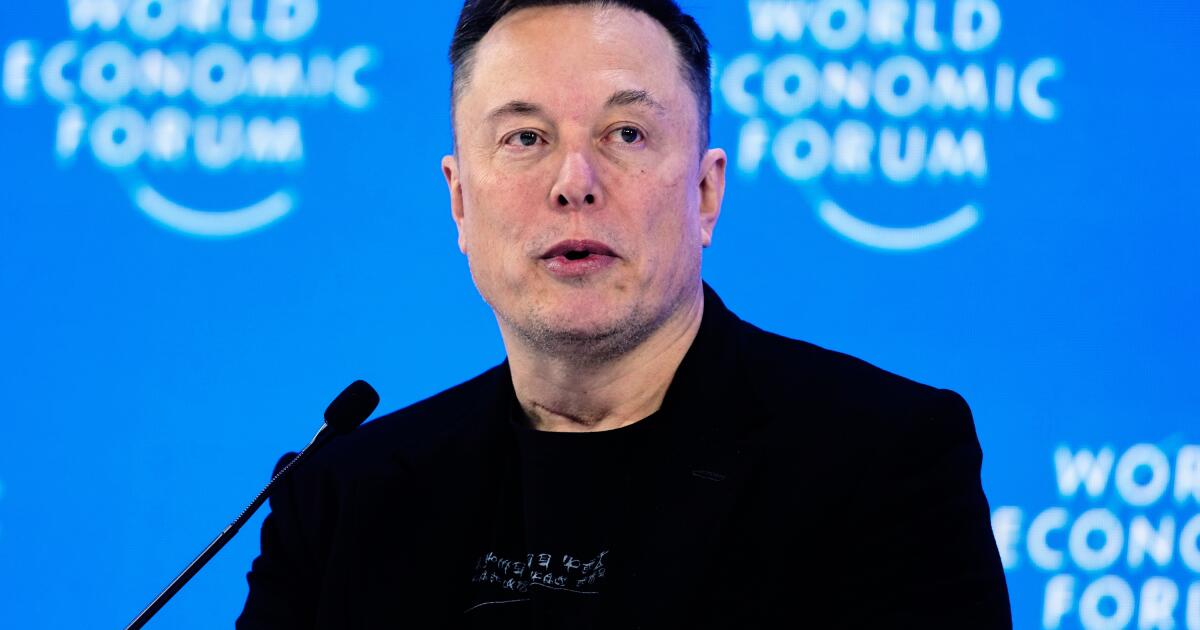
Elon Musk became the first trillionaire in recorded history on Friday morning, when SpaceX began trading on the Nasdaq under the ticker SPCX and its shares jumped from a $135 listing price to $150 at the opening bell.
The rocket company’s initial public offering raised a record $75 billion and valued SpaceX at roughly $1.77 trillion. Musk’s stake is now worth an estimated $690 billion, and combined with his Tesla holdings, his total fortune crossed $1 trillion, touching $1.18 trillion as the shares climbed through the morning.
Nearly all of it exists on paper, in the equity of companies he controls, and it stands at more than double the wealth of the next-richest person on earth.

Sixteen months before the opening bell, Musk was boasting about a different line of work. “We spent the weekend feeding USAID into the wood chipper,” he posted on X in February 2025, days into his blitz through the federal bureaucracy at the head of the Department of Government Efficiency.

Elon Musk@elonmusk
We spent the weekend feeding USAID into the wood chipper.
Could gone to some great parties.
Did that instead.

Mike Benz @MikeBenzCyber
it ain’t dead yet, but already, and for the very first time, a hole has been put in the Terror Titanic
6:54 AM · Feb 3, 2025 · 25.8M Views
8.08K Replies · 20.3K Reposts · 158K Likes
The agency he was describing ran the largest humanitarian operation on earth. At CPAC three weeks later, Argentine President Javier Milei handed him a red chainsaw engraved “Viva la libertad, carajo,” and Musk hoisted it over his head: “This is the chainsaw for bureaucracy.”

Atul Gawande, the surgeon who led global health at USAID under President Biden, has chronicled what happened next. Stop-work orders landed overnight, with no warning to the governments that depended on American medicine and food. Supplies already sitting in warehouses could not legally reach the people they had been purchased for.
Within weeks, Musk and Secretary of State Marco Rubio had gutted the agency’s staff and killed more than four-fifths of its contracts — and neither Congress nor the Supreme Court stopped them.
Last November, in The New Yorker, Gawande published the arithmetic of the aftermath: the dismantling of USAID had already killed an estimated 600,000 people, two-thirds of them children.
The figure comes from a model built by Boston University epidemiologist Brooke Nichols — a deliberately conservative one, which assumes the programs that survived will be fully sustained. Her team has since closed out the count at the one-year horizon: more than 762,000 dead, over 500,000 of them children, lost to pneumonia, diarrhea, malaria, AIDS, and hunger.
Pope Leo XIV asked the question that hangs over this milestone nine months before it arrived.
Here’s the background