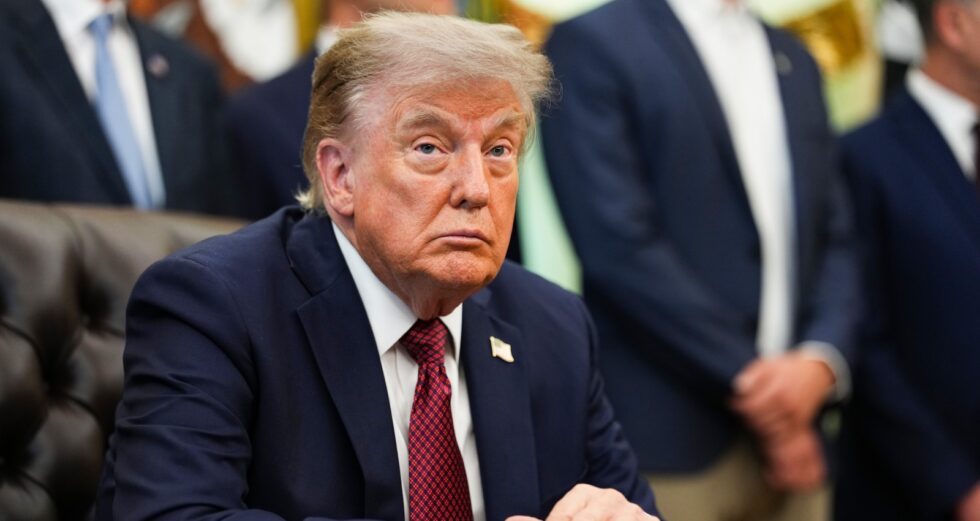
President Trump spent his entire first term fighting political forces – seen and unseen – who didn’t want him in the White House because he was a legitimate outsider.
Over the years, there have been reports exposing who some of those players were, but now, thanks to ace investigative reporter Catherine Herridge, we are learning even more about who was involved in subverting Trump and his agenda, and which government agencies.
Advertisement
Herridge reported during an appearance on NewsNation’s “Katie Pavlich Tonight” last week that a senior member of former Director of National Intelligence Tulsi Gabbard’s Director’s Initiatives Group, known as the DIG, described a pattern in which intelligence community officials acted on the belief that they needed to protect a globalist perspective by limiting certain information provided to policymakers, including Trump.
Herridge’s comments came amid discussion of recently declassified federal documents related to intelligence assessments from 2020 concerning China’s election influence operations.
Advertisement
Those records, which were released in connection with a primetime address by Trump the prior week, included internal communications indicating that some intelligence reports had been edited to remove references linking China’s activities to the 2020 U.S. election.
Advertisement
One email dated Nov. 20, 2020, from a Strategic Intelligence Analyst specializing in China and North Korea assessments stated that officials had “deliberately massaged our one pending PDB (President’s Daily Brief) to avoid any direct links to the election.”
Herridge said she reviewed the declassified materials and found they were consistent with earlier whistleblower allegations that intelligence regarding China’s alleged multi-domain influence campaign—described as efforts to hinder Trump’s reelection and portray him negatively as a candidate—had been suppressed or altered.
During the interview, she also linked those findings to broader observations shared by a source within Gabbard’s investigative team.
“In the last week, I’ve been speaking with a very senior member of Director Gabbard’s investigations team known as the DIG,” she said.
“And what they told me is that they did see a pattern where there was a sense or a feeling in the intelligence community that they just knew better,” she added.
“They had to save President Trump from his own instincts, from his own tendencies, and that there was very much a globalist view. And they had to preserve a globalist view,” Herridge continued.
Advertisement
“So, whether it was downplaying or suppressing intelligence about the threat from China, whether it was giving a pass and calling the Hunter Biden laptop Russian disinformation, there was this level of a bureaucracy, a kind of conspiracy that was making decisions about the kind of information that should be reaching policy makers and ultimately the commander-in-chief,” the former Fox News and CBS News correspondent noted.
Over the past week, Catherine Herridge has been speaking directly with a senior insider on Director Tulsi Gabbard’s investigative team.
What was revealed is nothing short of treason.
Investigators believe they uncovered evidence of a deeply entrenched bureaucracy within the… pic.twitter.com/cCAgjxn5Im
— Overton (@overton_news) July 24, 2026
The DIG, established during Gabbard’s tenure, examined a range of issues, including the origins of COVID-19, Crossfire Hurricane, Anomalous Health Incidents—commonly known as Havana Syndrome—and domestic surveillance practices.
Advertisement
Gabbard’s team also reviewed several intelligence community assessments produced during the Biden administration, concluding that some contained analytical shortcomings, including the selective exclusion of information and an overreliance on limited sourcing.
According to Herridge, her source said the DIG identified similar patterns across multiple investigations, suggesting that decisions about what intelligence was presented to senior government officials followed a consistent approach.
Advertisement
Herridge also highlighted additional details from the declassified materials involving Nikki Floris, who at the time was a senior FBI official overseeing counterintelligence matters related to foreign influence operations.
The records included instant messages attributed to Floris that described internal discussions and dynamics within the FBI.
This article may contain commentary which reflects the author’s opinion.